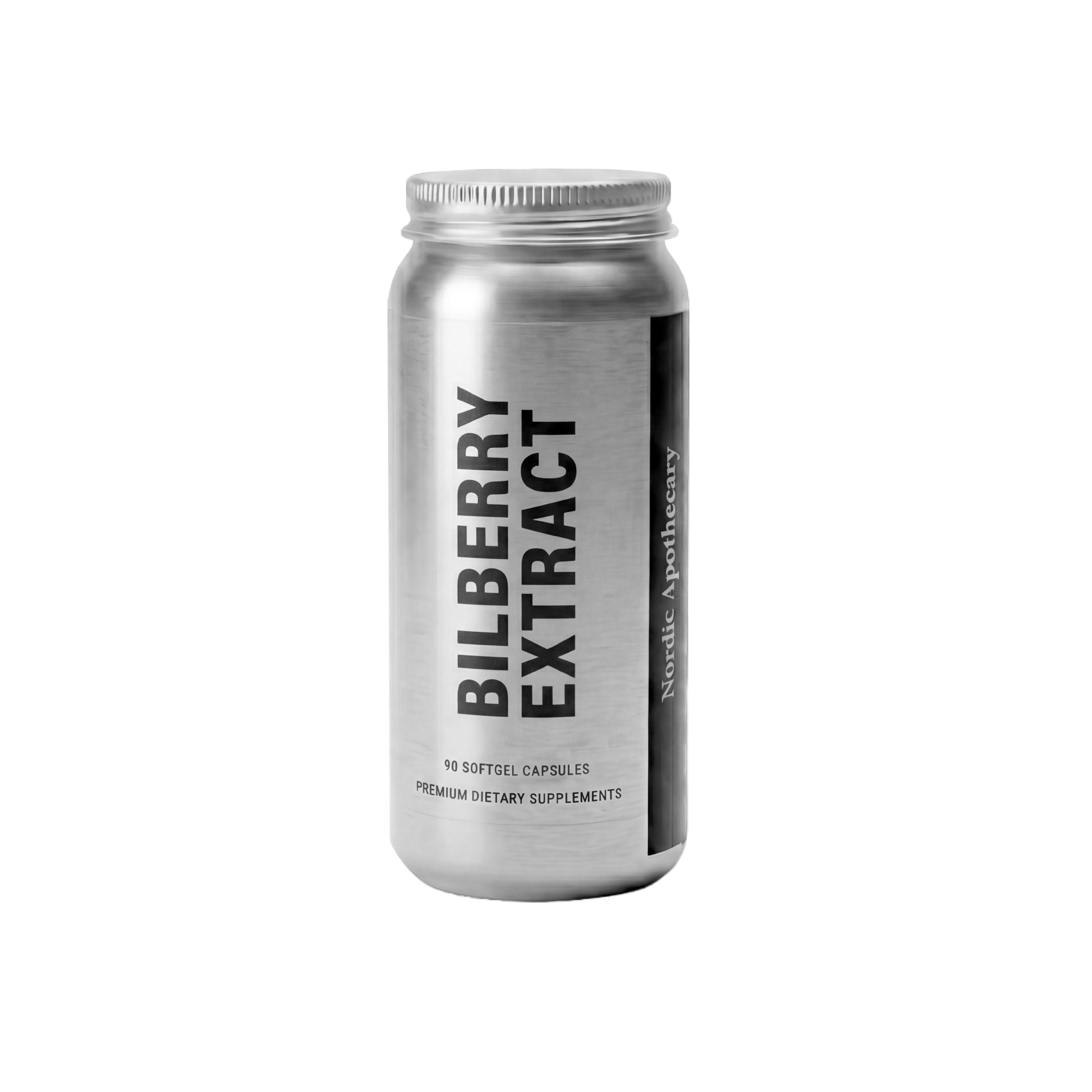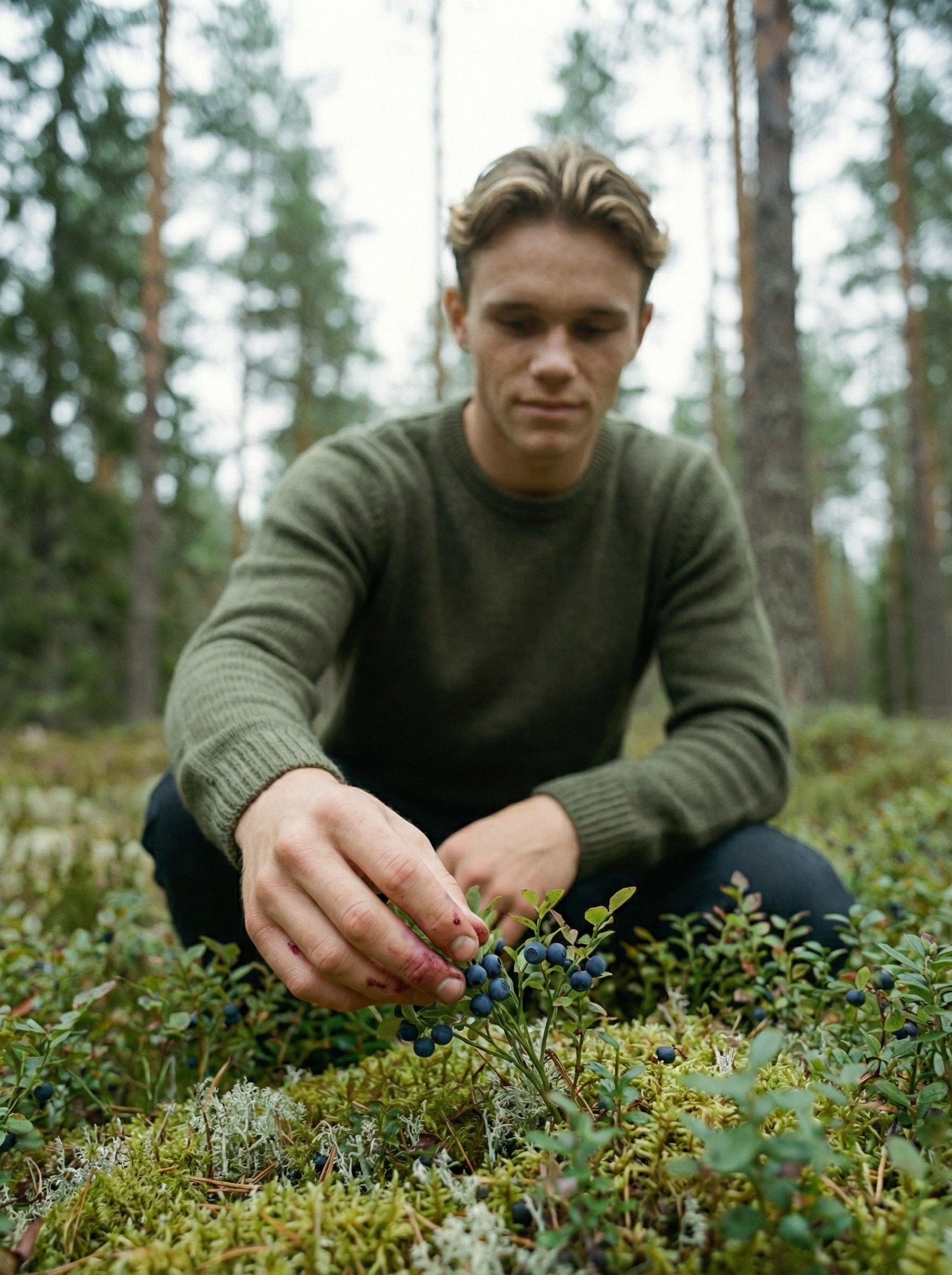
If you have picked blueberries in a shop and bilberries in a Nordic forest, you already know the difference in your hands. The blueberry cuts pale and green inside. The bilberry is dark all the way through, and it stains your fingers a purple that does not wash off before dinner.
That stain is the entire point of this berry.
Not a blueberry
The two are cousins, not twins. The cultivated blueberry you buy in a supermarket is usually Vaccinium corymbosum, bred to be large, firm and mild. The bilberry — Vaccinium myrtillus — grows wild and low across the forests of Scandinavia and northern Europe. It is smaller, softer, more intensely flavoured, and it cannot really be farmed at scale. To this day, the bilberries that go into food and extracts are largely hand-picked from wild forest, often in Finland, Sweden and Norway.
The colour difference is not cosmetic. It reflects where the pigment sits. In a blueberry the deep colour is mostly in the skin. In a bilberry it runs through the entire fruit, flesh and all — which means, per berry, a great deal more of it.
What the colour is made of
The pigment is a family of compounds called anthocyanins. They are what make bilberries, blackcurrants and red cabbage the colours they are, and they belong to the broader group of plant polyphenols that nutrition science has spent decades interested in.
We will be careful here, because this is exactly where berry marketing tends to sprint ahead of the evidence. Anthocyanins are studied as antioxidants, and wild Nordic berries are genuinely among the richer dietary sources of them. What we will not do is promise you outcomes — eyesight, in particular, is a claim that has trailed bilberry around since the Second World War and rests on far shakier ground than the folklore suggests. The honest statement is narrower and still worth something: the bilberry is one of nature's more concentrated sources of these pigments, grown in a place where plants have to work hard to produce them.
Why the hard conditions matter
There is a reason a berry from a cold, dim, short northern summer is so dense with pigment. Plants produce compounds like anthocyanins partly in response to stress — light, cold, a brief growing season. The bilberry's environment is, from a plant's point of view, demanding. What looks like hardship on the forest floor is also what makes the berry what it is.
That is the quiet lesson of the bilberry. Its deep colour is grown in over a short northern summer, in a berry most of the world has never tasted and routinely mistakes for something milder. Product quality and composition still have to be judged from the actual label and documentation; the forest story does not replace that work.
Sources and further reading
This article is educational and is not medical advice.