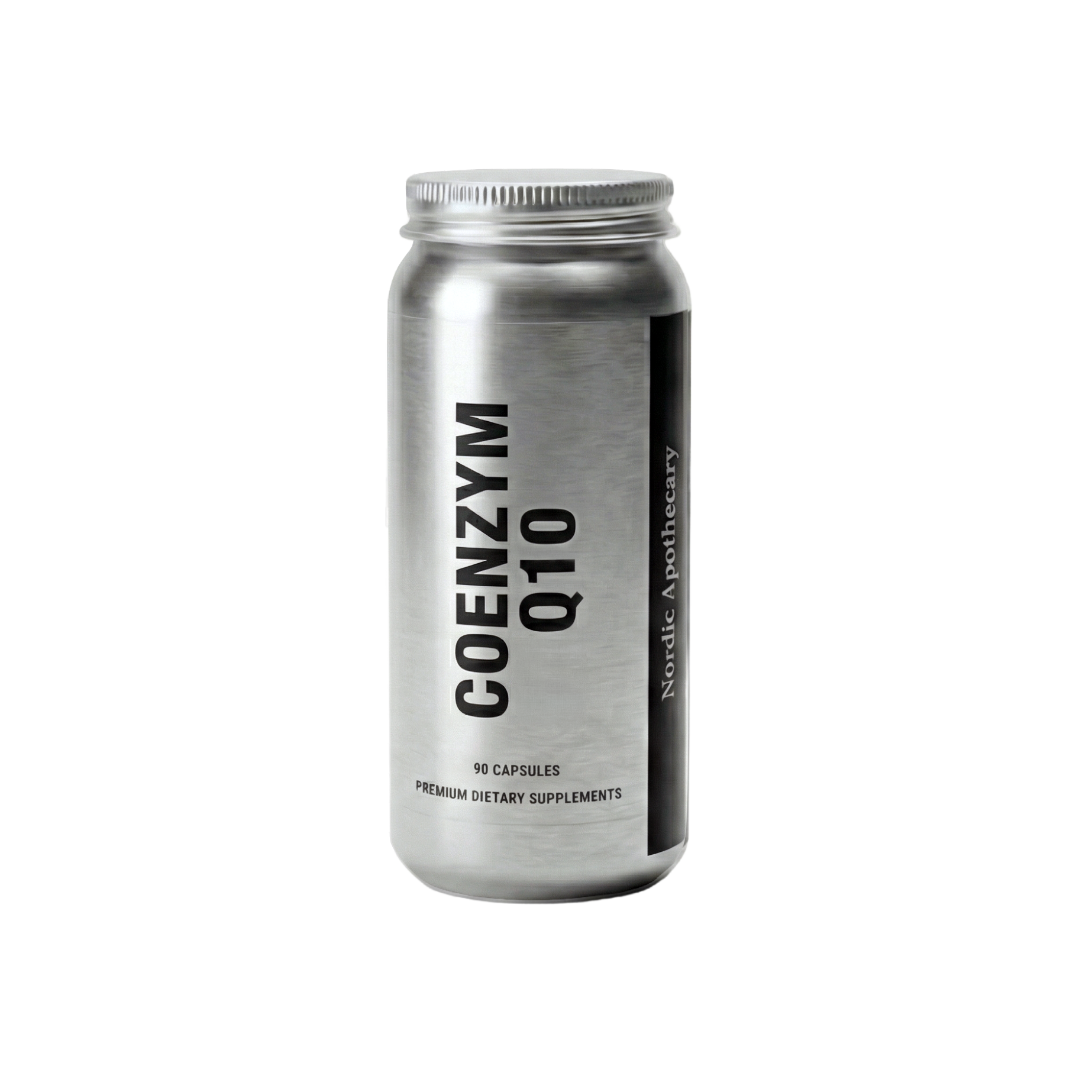
"Boosts your energy" is printed on so many bottles that the phrase has stopped meaning anything. It is worth pausing on CoQ10, because it is one of the rare cases where the word "energy" points at something concrete rather than a feeling.
The literal version of "cellular energy"
Inside almost every cell in your body sit mitochondria — small structures that convert the food you eat into a chemical called ATP, the currency your cells actually spend. This process runs on an assembly line called the electron transport chain, and coenzyme Q10 is one of the workers on that line. It shuttles electrons from one step to the next.
So when someone says CoQ10 is involved in cellular energy production, they are not being poetic. They are describing a specific job in a specific pathway. Whether swallowing more of it changes how you feel is a separate and much harder question — but the biochemistry is real, which is more than most "energy" ingredients can claim.
Your body also makes its own CoQ10, and it turns up naturally in organ meats and oily fish. It is not an exotic substance. It is something you already produce and eat.
Two words you will see on the shelf: ubiquinone and ubiquinol
These are the two forms of CoQ10, and the labels lean on the distinction. Ubiquinone is the oxidised form; ubiquinol is the reduced form. Your body converts between them constantly as CoQ10 does its job. Ubiquinol is often marketed as the "more absorbable" upgrade, and there is some evidence for better uptake — but as with a lot of these upgrades, the gap is smaller than the price difference implies, and a consistent dose of either matters more than the form.
Who tends to look into it
Two groups reliably arrive at CoQ10. The first is people over about forty, because the body's own CoQ10 levels tend to decline with age — a genuine, measurable trend. The second is people taking statin medications, because statins can lower CoQ10 as a side effect of how they work.
That second point is not something to act on from a blog. If you take statins and you are curious about CoQ10, that is a conversation for the doctor who prescribed them, not a decision to make from a product page. We would rather say that plainly than imply a supplement is the answer to a medication's side effects.
CoQ10 is a good example of how we would like the whole category to be discussed: a real molecule doing a real job, with honest uncertainty about what supplementing it does for any given person, and no pretending that "energy" is a promise rather than a place in a pathway.
Sources and further reading
This article is educational and is not medical advice.