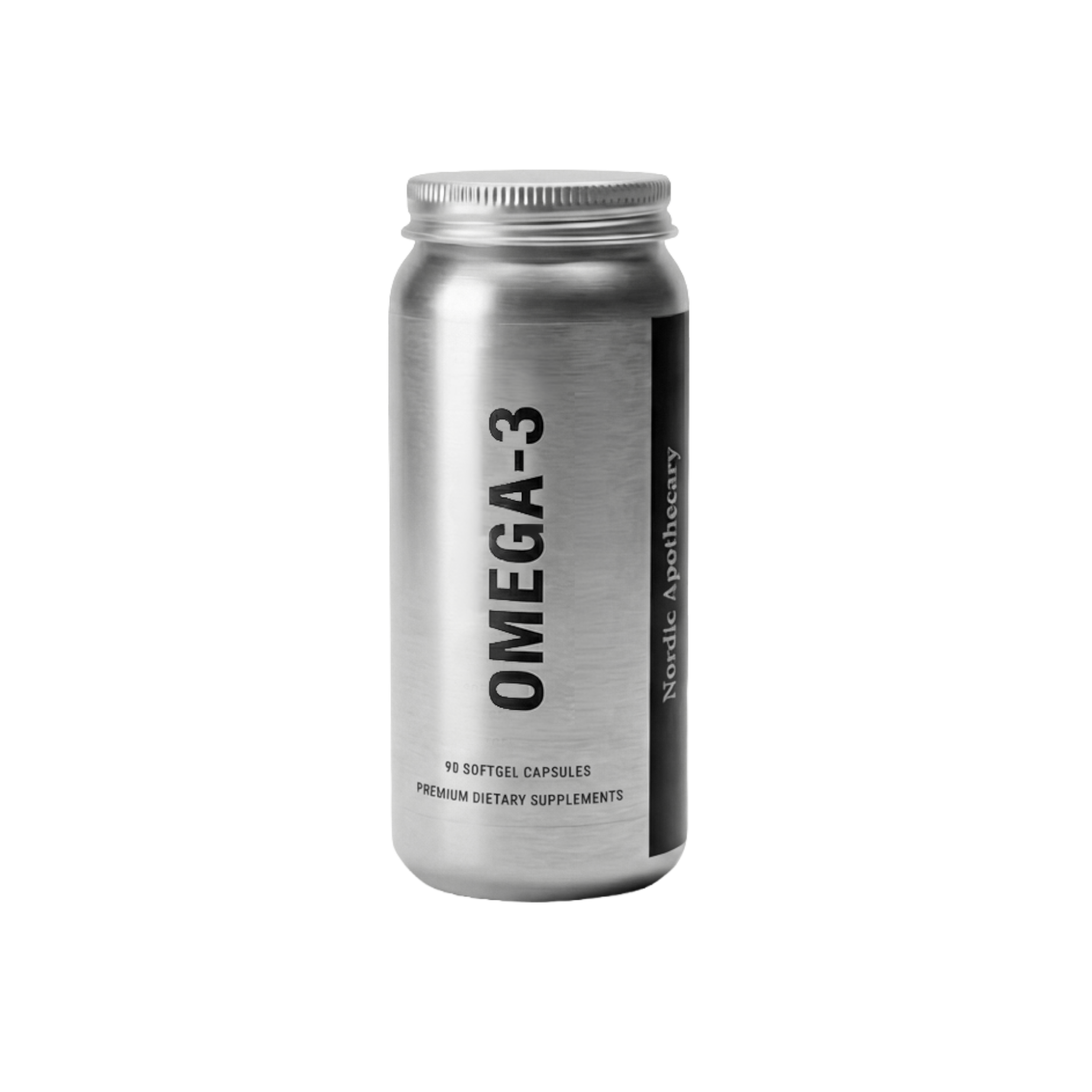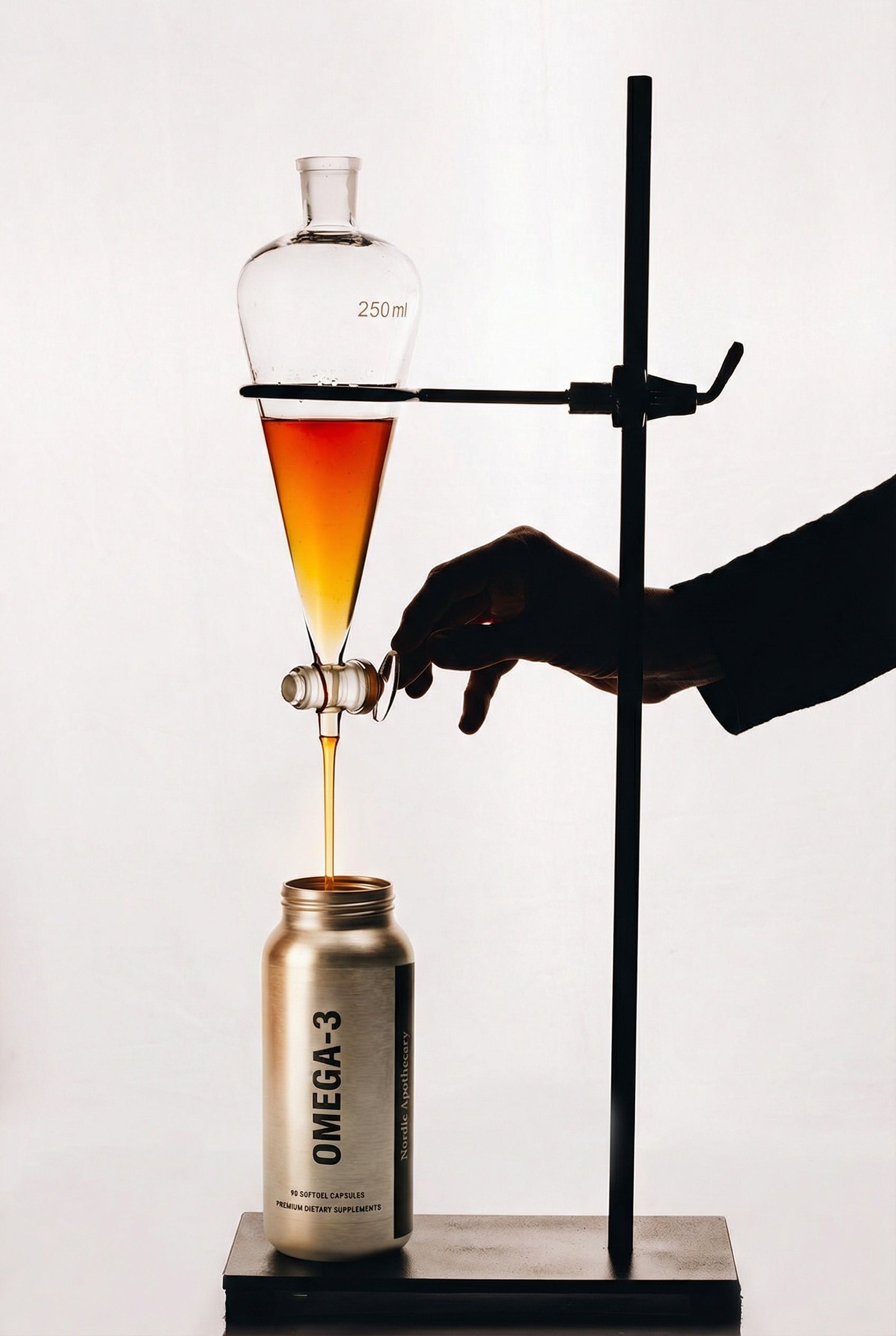
Most people buy omega-3 the way they buy paracetamol: they trust the big number on the front. On a fish oil bottle, that number usually lies to you — not dishonestly, just by omission. Here is how to read past it.
Start at the back, not the front. "1000 mg fish oil" describes the size of the oil, not the amount of the useful part. The best-studied marine components are EPA and DHA, two long-chain omega-3 fatty acids. A 1000 mg capsule might contain 300 mg of combined EPA and DHA, or it might contain 600. Same front label, double the substance.
Learn the two letters. EPA (eicosapentaenoic acid) and DHA (docosahexaenoic acid) are the forms your body can use directly. Plant omega-3 — the ALA in flaxseed and walnuts — has to be converted into these, and humans do that conversion poorly. This is the honest case for marine omega-3: it skips a step your body is bad at.
Add EPA and DHA together. This is the single most useful habit. Ignore the headline, find the two numbers, add them. That combined figure is what you compare between products. Everything else on the front of the bottle is packaging.
Where it comes from before it reaches you
Marine omega-3 does not start in the fish. It starts far below them.
Microalgae in cold ocean water produce EPA and DHA in the first place. Krill and other small creatures eat the algae. Small fish eat the krill. Larger fish eat the smaller fish. By the time omega-3 reaches a mackerel or an anchovy, it has moved up several steps of the ocean food chain, concentrating along the way.
This matters for two reasons. First, it explains why cold-water fish are so rich in these fats — they live where the algae thrive. Second, it explains the purity question. Things other than omega-3 also concentrate as they move up the chain, which is why sourcing and testing are not marketing decoration for a fish oil brand. They are the whole job.
The freshness question nobody prints on the label
Omega-3 fats oxidise. Oxidation degrades oil quality and can produce a harsh smell or aftertaste, although taste alone is not a complete quality test. This is why handling, freshness and independent quality testing matter alongside the EPA and DHA figures. A large number on the label does not answer the freshness question.
None of this requires you to become a chemist. It asks three things: turn the bottle around, add EPA and DHA, and ask the brand where the oil came from and whether they will show you. A company that answers those questions comfortably is telling you something before you have read a single claim.
Sources and further reading
This article is educational and is not medical advice.